The Eco-Web Team collaborated with an oil and gas client, BC Energy Regulator (BCER), and Halfway River First Nations (HRFN) in efforts to construct and develop a well pad for natural gas extraction in Northeast BC. During the Pre-Construction Site Assessment of the proposed well pad and access road, Eco-Web biologists completed environmental ground sweeps within a 500m buffer area of the proposed development. During these sweeps, the biologists discovered an active/well used mineral lick. Initially the mineral lick was 255 m from the NE corner of the proposed pad, but after initial discussions during an onsite meeting to review the mineral lick with the BCER and HRFN, the client shifted the pad and reduced the size of the footprint, placing the closest point 355 m away from the mineral lick. The purpose of this onsite meeting was to review the feature and determine some initial ideas on how placement of the development could be mitigated based upon the wildlife habitat values encountered. Moving and reducing the footprint of the pad, along with restoring some cover habitat in the cutblock and placement of topsoil along the north boundary for visual screening were some of the ideas discussed in this initial meeting. A second meeting took place to review the mitigation proposed to ensure everyone was in agreement with the direction the client and Eco-Web recommended.
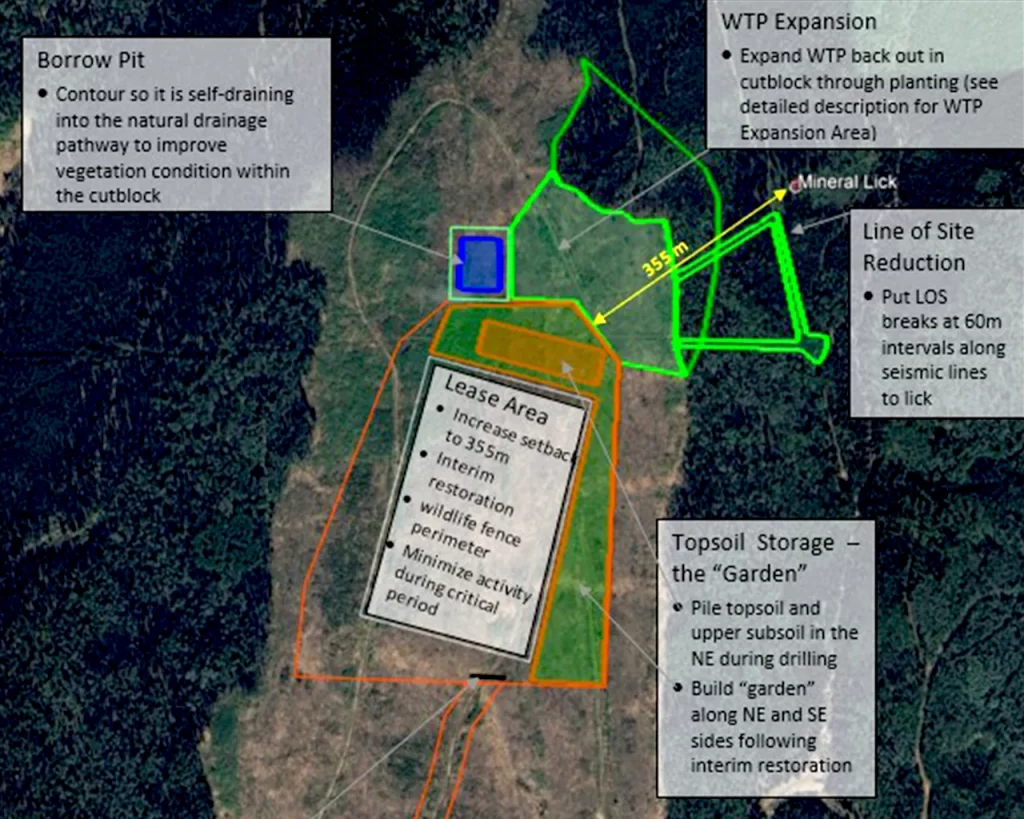
Eco-Web and the client’s primary strategy in reducing the impact of the proposed development on the mineral lick was to increase the setback and restore some of the habitat to improve the buffer and lines of sight around this wildlife habitat feature. While the client was able to modify the design enough to increase the setback an additional 100m from the original surface location, a 500m setback was not attainable without impacting the gas extraction design of the pad. The existing cutblock had already reduced the forested buffer around this feature to 190 m, so it was proposed to restore this buffer back to 355 m through the re-planting areas of the cutblock and other mitigation measures featured in Figure 1 for a faster restoration of the area to restore the forest values and benefits of visual screening and noise mitigation around the mineral lick.
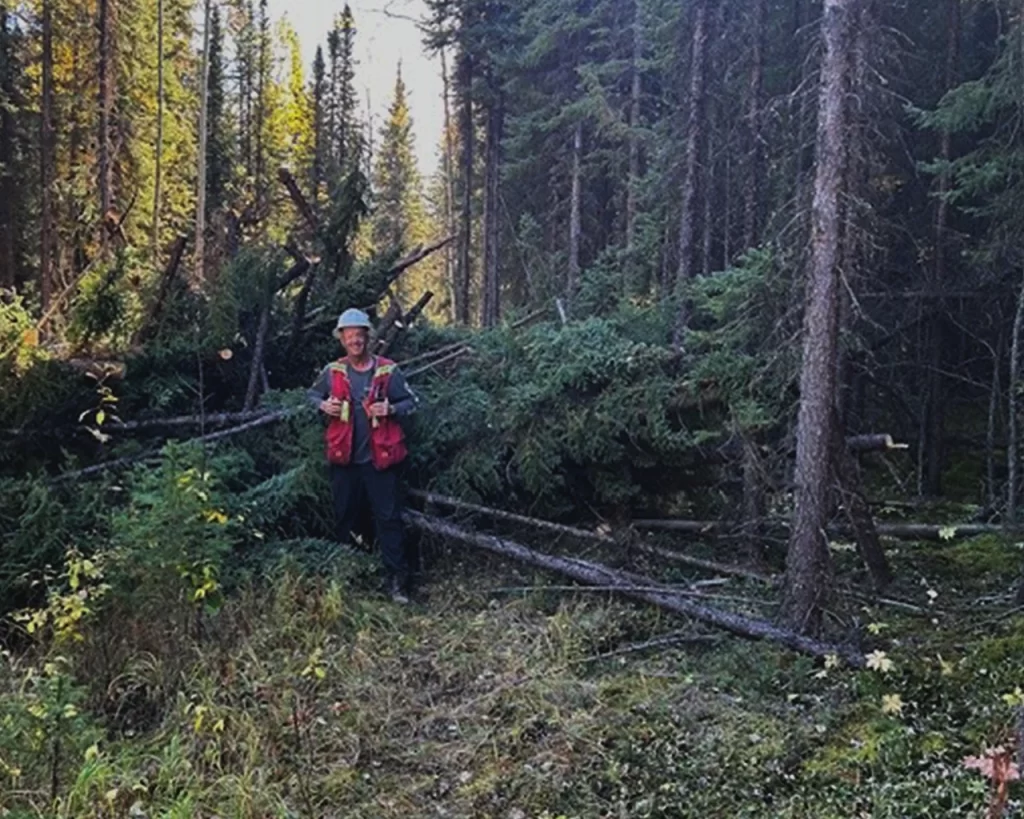
To address the seismic line openings going into the mineral lick from the cutblock side, Eco-Web installed line of sight (LOS) breaks at the entrance to the cutblock and approximately every 60 m along the seismic line. The LOS breaks were constructed from dead timber salvaged from the forest using a labour crew and chainsaw work within the forest, taking down dead standing trees and laying them across the line as a brush wall. The LOS features maintained the wildlife trail by staggering the wall to allow animals to maintain access to the lick (Figure 2). A third meeting and follow up visit was completed to show the BCER and HRFN the completed LOS breaks and planting within the cutblock.
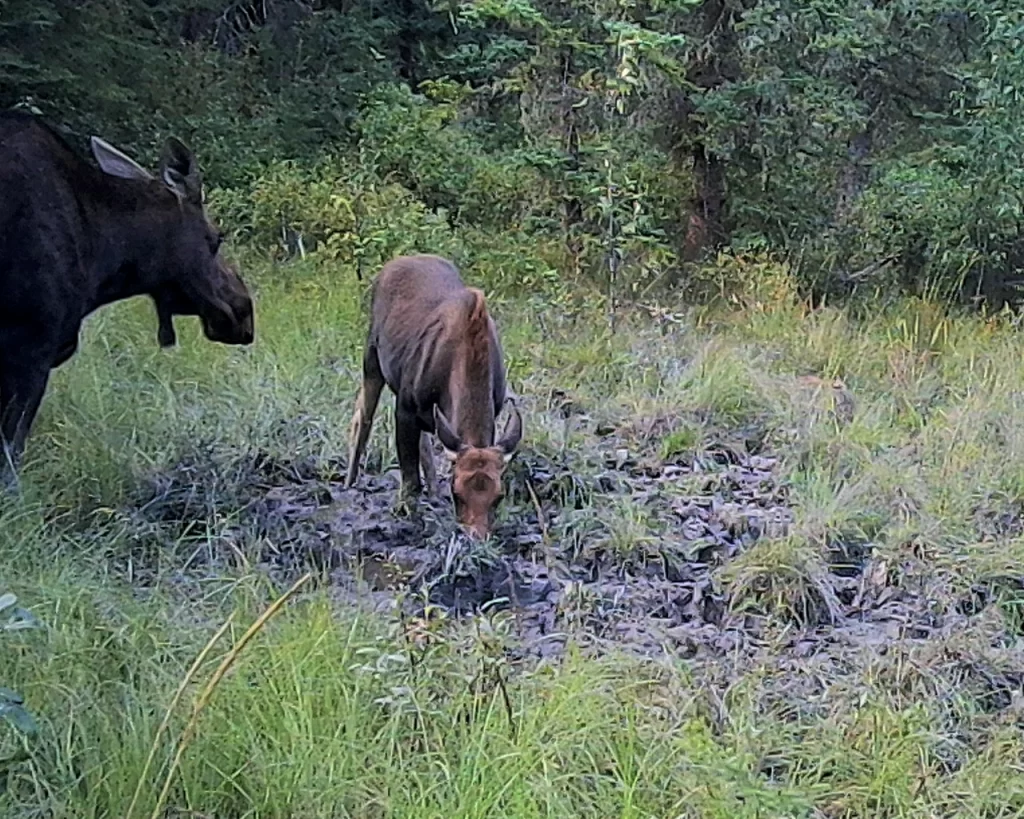
During the construction activities, game cameras were set up at the mineral lick location, along the wildlife trails, and at the LOS break locations to monitor wildlife activity and if warranted adjust construction methodology if wildlife behaviour was noted to be affected (Figure 3).
To date, the access road and well pad has been constructed. Game cameras consistently captured wildlife use at the mineral lick and along the wildlife trails and at the LOS beak locations. Future game cameras monitoring will continue throughout the drilling phase of the development.